Showing posts with label Sumida River. Show all posts

Tuesday, 9 December 2014

A Journey Down the Sumida River


    The air is cool after a rain shower and the sky is darkening. Across the black water a Japanese man sings rather melodiously while exercising. He is of great interest to my fellow passengers on this tourist boat: young couples, groups of old Japanese women with high-pitched voices, a smattering of foreigners of indeterminate origin. 

This being Tokyo, the backdrop is unsightly: a high river wall, trucks passing along an elevated expressway and a set of soulless high rises, one of which is surmounted by what looks like a gold rendering of Jabba the Hut’s tail. The 634 metre Skytree Tower dwarfs all, its syringe-like summit intermittently veiled by dark, drifting clouds.  

    It is the middle of July, and I am travelling one last time on the Suijo water bus. At midnight I will take my leave of this mega-city. I sit at the stern of the boat, in the open air, beside a fluttering and very dirty Hinomaru flag. Despite the throb of the engine and the accompanying fumes this is the place to be. Here, you feel the light breeze and smell the salty water as the boat travels downriver towards the Rainbow Bridge and Tokyo Port. Here it is almost possible to forget that you live in a virtually endless urban conurbation, home to tens of millions of stressed and overworked souls.      

    The boat turns 180 degrees and we leave the jammed tourist district of Asakusa. We head south, passing beneath a very low red bridge of three arches, then a blue one that looks like a poor man’s version of the Tyne Bridge at Newcastle. On the paved riverbank, blue tarpaulin sheets shield the makeshift homes of local tramps. The embankment is adorned with giant images of old ukiyo-e, wood block prints by masters like Hiroshige and Hokusai.

    I head inside the boat, past ecclesiastical windows and a sign bearing the incongruous message ‘May Peace Prevail on Earth’. Marble steps lead up to the main seating area, where rows of long benches upholstered in green leather extend towards the bow. Attractive lanterns line the walls, giving the boat an old-fashioned feel. Most passengers sit here, some enjoying cups of delicious, reddish-coloured and pricey Downtown Ale. 

    Great blue gates are occasionally visible on each side of the river, beyond which lie tributaries or canals. Enormous signs advertise products such as Bulgaria yoghurts, and there are unattractive business hotels and apartment blocks aplenty. 

    We pass rival tourist boats, some of which are decked out with hanging red lanterns. Others seem to have been chartered by small groups posing for pictures on the top deck. To the west Tokyo Tower, the city’s ‘navel’, is illuminated and looks resplendent. 

    The river widens and branches in two, and we take the right fork. The famous Tsukiji fish market is derelict at this time of day, its landing stages deserted and its carts and trucks motionless. A short distance downstream, trees can be seen above a long river wall, a tiny hint of the beauty which lies on the other side, where the gardens of Hama-rikyu await. You can usually get off the boat here, but the gardens have already closed this summer evening.  

     The river widens once more as we come in sight of the big wheel of Odaiba and the towering Rainbow Bridge. A giant yellow F flashes mysteriously to the east. In the distance, past the immense suspension bridge, huge container cranes line the waterfront. We do not travel that far, instead pulling up at Hinode Pier. I haul my overweight backpack onto my shoulders and head for Tokyo Tower. I assume I will never take the boat again and, for perhaps the only time in Tokyo, I feel a sense of sadness.

Monday, 16 June 2014

5 Things to do in Tokyo


           Half a century ago Ian Fleming, the creator of James Bond, travelled to Tokyo and wrote of ‘appalling over-crowding’ and ‘endless and very depressing suburbs’. Not much has changed in those respects. Japan’s capital remains exceptionally busy and pretty ugly. It’s not a place that is going to win the average tourist over in a heartbeat. Still, Tokyo does have some great things to offer the traveller. Here is a small selection.  


          The lovely and extensive Hama-rikyu Gardens (300 yen) are situated near the high-end shopping district of Ginza and the celebrated Tsukiji fish market, the world’s largest. While the environs (a dirty moat, busy roads and skyscrapers in all directions) are not promising, the park itself is beautiful. There is a large tidal pond, which is supposedly frequented by green crabs, goby and other exotic fish, although you may be hard pressed to spot them in the murky green water. 

        Wooden bridges traverse the waterways, and the lawns and pine trees are painstakingly manicured. A cool breeze blows in off the nearby Sumida River, bringing with it the smell of the sea, and you can relax on benches in the shade or crash out beneath an arbour. In June, blue hydrangea flowers blossom. Ulysses S. Grant, the legendary U.S. civil war commander and rather less successful president, stayed here in 1879, in a building that was sadly demolished ten years later. 


          The best way to travel to the Hama-rikyu Gardens is by the Suijo water bus (740 yen), which departs from the heavily touristed district of Asakusa. This journey down the Sumida River is an absolute joy if your usual means of transportation in Tokyo is the train at rush hour. The best place to sit is at the back in the open air. From this vantage point you can study the city’s many bridges (‘of great individuality’, according to the tourist hype), and look out for Tokyo Tower as you near your destination. You might also want to try a glass of the excellent Downtown Ale (‘Recommend!’). 


          Down a long avenue shaded by sloping trees and featuring three handsome wooden torii gates lies Meiji-jingu (no entrance fee), a most attractive shrine that commemorates Emperor Meiji (1852-1912) and his wife. The approach is notable for a wall of sake barrels and a thoroughly out-of-place collection of sixty wooden wine barrels gifted by winemakers in Burgundy. For 500 yen you can write a wish or message of thanks to the enshrined deities on a small wooden plaque, or ema; a magnificent tree before the shrine is surrounded by hundreds of these. 

          There is also a shady and appealingly overgrown garden (500 yen), whose white, purple and blue irises are irresistible to camera-wielding Japanese visitors. Turtles and huge carp swim in a small pond at the southern end. Admire the beautiful surroundings and ignore the misleading tributes to the Emperor, who we read spent his life ‘earnestly praying for… peace with other countries’, when in fact his reign saw the annexation of Korea and other acts of expansionism. 


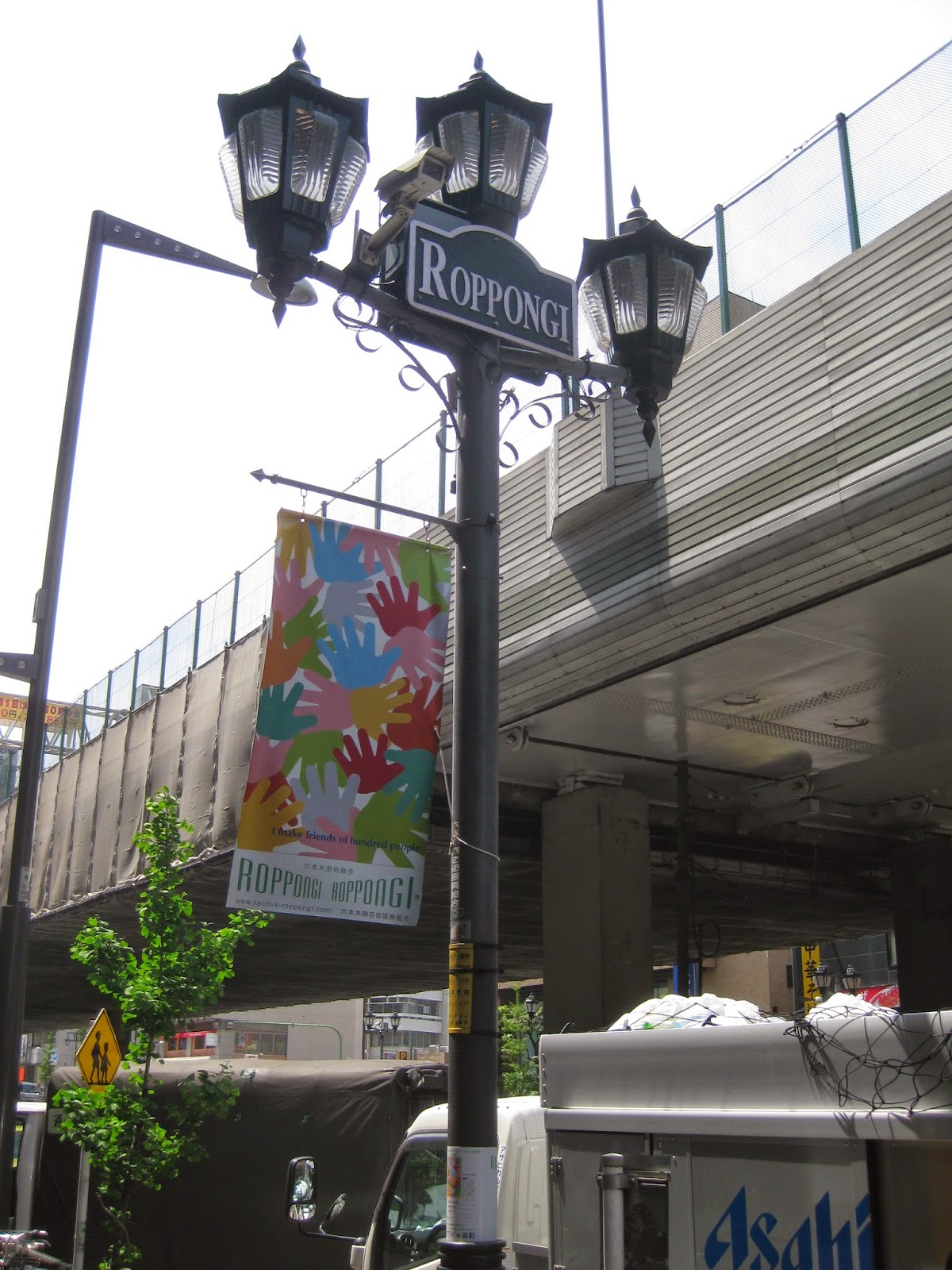
          Even if you don’t feel like hitting the bottle, you ought still to pay a visit to the nightlife centre of Roppongi. The scene that plays out at night in this famous hive of sleaze and drunkenness has to be seen to be believed. You may encounter besuited and apparently respectable Japanese businessmen passed out on the floor of the metro station, while the streets above are filled with Turkish restaurants, faux British pubs, ‘snack’ bars and smoky nightclubs throbbing with house music. A staggering number of black African men loiter on the sidewalks, desperately (and illegally) seeking to persuade booze hounds to enter establishments of ill-repute.


          It’s hard to believe, but you can go kayaking in the heart of Tokyo. Although the city’s rivers and canals are not very easy on the eye, it has to be a more rewarding way of burning calories than working out in a hotel gym. You need to be in some sort of shape to undertake the two to three hour journey with the Tokyo Great Kayaking Tour (6000 yen), for it’s a pretty exhausting Sunday morning endeavour. 

          Starting from Kayabacho, you cross the busy Sumida River, avoiding water buses and young thrill seekers, before entering the narrow and deserted waterways to the east. Here you are likely to come across small kids waving at you from bridges and hardy jellyfish that have somehow adapted to life in the city’s polluted rivers. It’s invigorating, and you’ll get a free beer or chu-hai at the end.