Saturday, 5 July 2014

In the footsteps of Nikos Kazantzakis in Japan


          Through a grille in a thirteen hundred year old wooden pagoda I see them: tiny clay figures of incredible age, their expressions concealed by the semi-darkness. Unlike the handful of squinting Japanese around me, I was prepared for this. Feeling like a minor criminal, I grab my flashlight and direct the weak beam at the scrawny ascetics before me. They are ululating and pounding their chests in lamentation, mourning the passing of the Buddha in their midst.


          I did not come to Horyu-ji to see these miniature statues, though. I was instead inspired by a description I chanced upon in a musty biography of one of my favourite writers: Nikos Kazantzakis. A student of Buddhism, he made a pilgrimage here in 1935, and raved about it in a letter to his wife in these terms: “Exquisite. Peaceful, pagodas, springtime-sweet air, Buddhas smiling in the half-light, paintings on silk, dancing girls and, above all, the goddess Kwannon, the goddess of mercy. This is the most beautiful statue I’ve ever seen.’
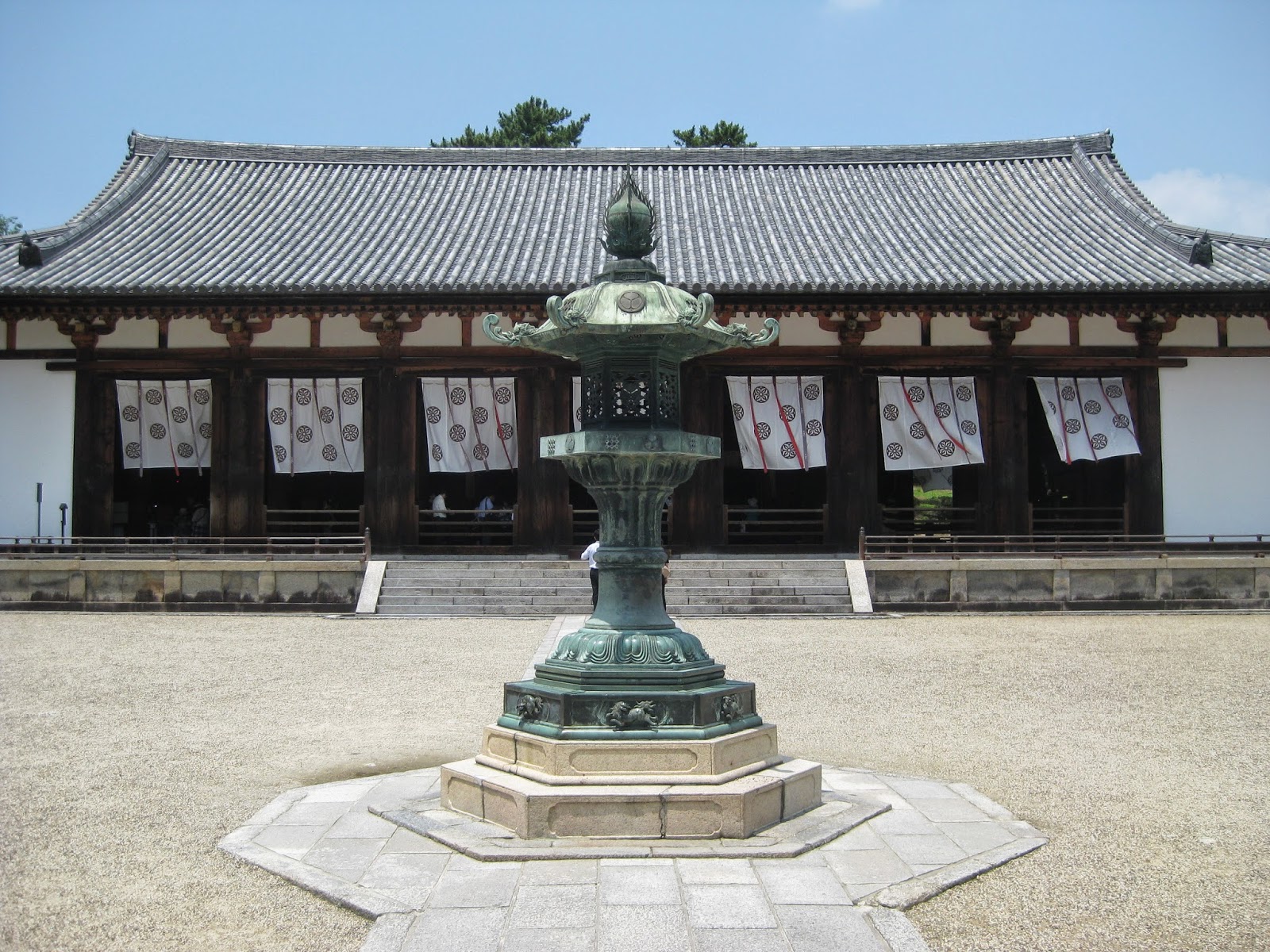


          On this late June day, however, the air is not springtime-sweet. The sun is bright, ferocious and dazzling. For once I look at the umbrella-wielding Japanese women with something other than scorn. Nor is it especially peaceful. Smart tour guides with blue flags and squeaky voices march hordes of bored-looking Japanese junior high school children around the large grounds at military pace. Occasionally, a shout of ‘atsu!’ (hot!) from one of the boys rises above the general murmur.  


          There’s a dearth of foreigners, or at least white people at Horyu-ji, underlining the fact that it’s not that easy to get to. It took me two hours from Kyoto Station, first on a slow-paced local train along a single-track railway to Nara, then across a tableland of saturated rice fields and ugly houses to the dusty town of Ikaruga. Green hills could be seen in the distance in all directions. After a fifteen minute walk in unforgiving heat and humidity I reached a long and narrow avenue of sloping pines. It seemed a fitting approach to one of Japan’s oldest temples.  


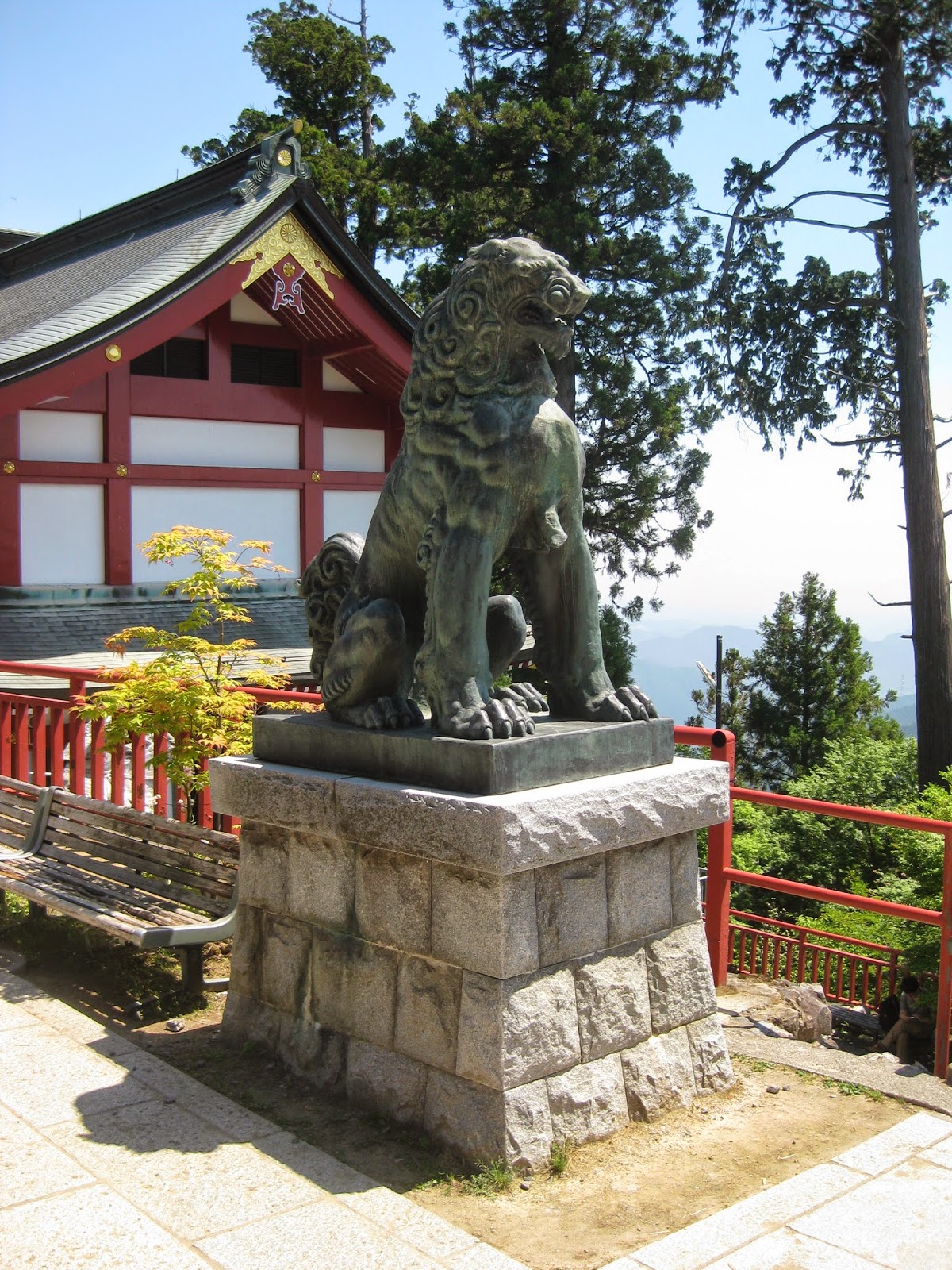
          Indeed, according to the tourist bumf, Horyu-ji is home to ‘the world’s oldest surviving wooden structures’, among whose number is the aforementioned five-story pagoda. Looking at this brown and white edifice with its deep eaves, I find the claim hard to believe: rather disappointingly, it looks in great shape. I had hoped for a sight redolent of antiquity that would send a thrill though my body. Of more interest are the immense and discoloured clay guardians, with their rippling muscles and fearsome expressions, that protect the central gate. Now they do look old. 


          As I leave the spacious western precinct, exiting through the long and shady cloister gallery, I feel a thrill of excitement. Ahead in the gallery of treasures the statue of the goddess Kannon waits, the one Kazantzakis called the most beautiful he’d ever seen. It stands before a mandorla in a hall of its own, a remarkably tall and slight wooden figure, with long arms and a water vase in its left hand. The figure is feminine, but the face looks more like a man’s. 


          It’s a mesmerising sight, well over a thousand years old, but is it the one Kazantzakis spoke of? Later, back in Tokyo, I discover that Horyu-ji houses another celebrated statue of Kannon, a so-called ‘secret Buddha’ that can only be seen in the spring and fall. I guess I’ll never know.


Monday, 16 June 2014

5 Things to do in Tokyo


           Half a century ago Ian Fleming, the creator of James Bond, travelled to Tokyo and wrote of ‘appalling over-crowding’ and ‘endless and very depressing suburbs’. Not much has changed in those respects. Japan’s capital remains exceptionally busy and pretty ugly. It’s not a place that is going to win the average tourist over in a heartbeat. Still, Tokyo does have some great things to offer the traveller. Here is a small selection.  


          The lovely and extensive Hama-rikyu Gardens (300 yen) are situated near the high-end shopping district of Ginza and the celebrated Tsukiji fish market, the world’s largest. While the environs (a dirty moat, busy roads and skyscrapers in all directions) are not promising, the park itself is beautiful. There is a large tidal pond, which is supposedly frequented by green crabs, goby and other exotic fish, although you may be hard pressed to spot them in the murky green water. 

        Wooden bridges traverse the waterways, and the lawns and pine trees are painstakingly manicured. A cool breeze blows in off the nearby Sumida River, bringing with it the smell of the sea, and you can relax on benches in the shade or crash out beneath an arbour. In June, blue hydrangea flowers blossom. Ulysses S. Grant, the legendary U.S. civil war commander and rather less successful president, stayed here in 1879, in a building that was sadly demolished ten years later. 


          The best way to travel to the Hama-rikyu Gardens is by the Suijo water bus (740 yen), which departs from the heavily touristed district of Asakusa. This journey down the Sumida River is an absolute joy if your usual means of transportation in Tokyo is the train at rush hour. The best place to sit is at the back in the open air. From this vantage point you can study the city’s many bridges (‘of great individuality’, according to the tourist hype), and look out for Tokyo Tower as you near your destination. You might also want to try a glass of the excellent Downtown Ale (‘Recommend!’). 


          Down a long avenue shaded by sloping trees and featuring three handsome wooden torii gates lies Meiji-jingu (no entrance fee), a most attractive shrine that commemorates Emperor Meiji (1852-1912) and his wife. The approach is notable for a wall of sake barrels and a thoroughly out-of-place collection of sixty wooden wine barrels gifted by winemakers in Burgundy. For 500 yen you can write a wish or message of thanks to the enshrined deities on a small wooden plaque, or ema; a magnificent tree before the shrine is surrounded by hundreds of these. 

          There is also a shady and appealingly overgrown garden (500 yen), whose white, purple and blue irises are irresistible to camera-wielding Japanese visitors. Turtles and huge carp swim in a small pond at the southern end. Admire the beautiful surroundings and ignore the misleading tributes to the Emperor, who we read spent his life ‘earnestly praying for… peace with other countries’, when in fact his reign saw the annexation of Korea and other acts of expansionism. 


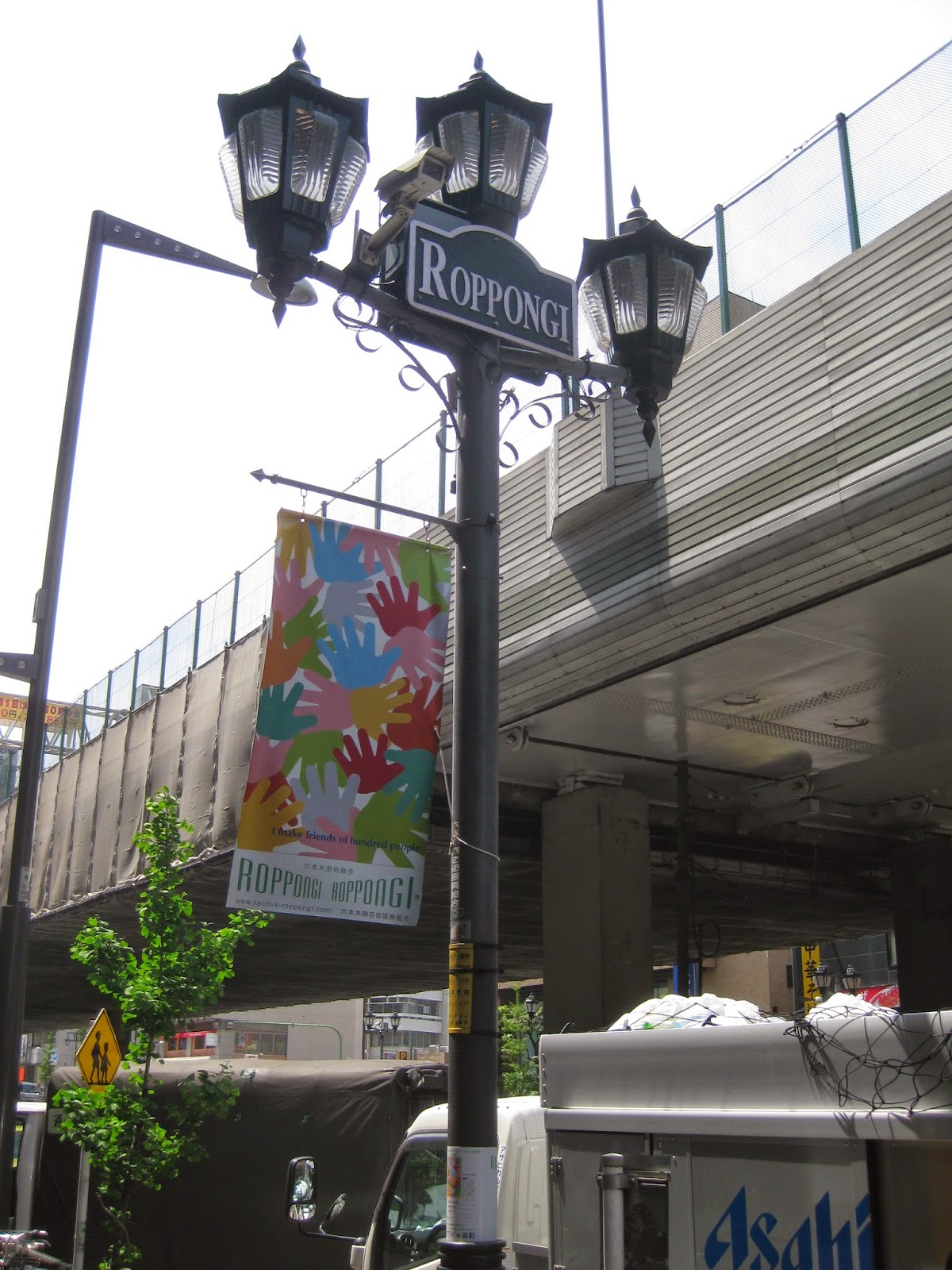
          Even if you don’t feel like hitting the bottle, you ought still to pay a visit to the nightlife centre of Roppongi. The scene that plays out at night in this famous hive of sleaze and drunkenness has to be seen to be believed. You may encounter besuited and apparently respectable Japanese businessmen passed out on the floor of the metro station, while the streets above are filled with Turkish restaurants, faux British pubs, ‘snack’ bars and smoky nightclubs throbbing with house music. A staggering number of black African men loiter on the sidewalks, desperately (and illegally) seeking to persuade booze hounds to enter establishments of ill-repute.


          It’s hard to believe, but you can go kayaking in the heart of Tokyo. Although the city’s rivers and canals are not very easy on the eye, it has to be a more rewarding way of burning calories than working out in a hotel gym. You need to be in some sort of shape to undertake the two to three hour journey with the Tokyo Great Kayaking Tour (6000 yen), for it’s a pretty exhausting Sunday morning endeavour. 

          Starting from Kayabacho, you cross the busy Sumida River, avoiding water buses and young thrill seekers, before entering the narrow and deserted waterways to the east. Here you are likely to come across small kids waving at you from bridges and hardy jellyfish that have somehow adapted to life in the city’s polluted rivers. It’s invigorating, and you’ll get a free beer or chu-hai at the end. 

Monday, 2 June 2014

Mount Mitake


          Spend enough time in Tokyo and there’s a good chance certain aspects of daily life will start to irk you. Maybe it’s the daredevils who ride their bikes on the sidewalk, oblivious to the danger posed to pedestrians. Perhaps you encountered a human wave at one of the mega-stations like Shinjuku, or you simply walked out the wrong exit and spent an infuriating twenty minutes searching for the place you came to see. 


          A fine place to escape the irritations of the capital is Mount Mitake, which lies in the Oku-Tama region a couple of hours to the west. As the train empties and you leave the urban sprawl behind, you sense the stress dissipating from your body and mind. Beyond Ome, a single-track railway takes you through a lovely valley. The mountains on either side are blanketed in green trees, with some empty patches where plantations have been chopped down.   


          It is best to arrive late in the afternoon, when the heat has subsided and the steep, switchback road up to the mountain hamlet is very quiet. The climb takes about an hour, through a shaded forest of arrow-straight and very tall cryptomeria trees. You’re unlikely to have much company, although you’ll probably have to pause to allow a few men on scooters to pass on their way downhill.
 
The start of the road up Mount Mitake

         Mitake is hiking country, and in the morning hundreds of Japanese arrive, many having ascended the mountain by means of a cable car. There are a number of well-marked routes through the woods that start from the not very inspiring shrine at the top of the hamlet, although you may find yourself wondering why you missed heavily advertised spots like the Rock Garden and Ayahiro Waterfall. Occasionally there’s a break in the tree line and the surrounding mountains or a distant hamlet in the valley far below come into view. In these moments it’s not hard to believe that Japan was once a truly beautiful country, before it was ravaged by war and crash industrialization.  


          Finding your way around the small community on Mount Mitake is not that simple. Most signs are in Japanese, and it’s a mercy that there are a handful of large maps in European script upon the walls. Just before the shrine there is a very short ‘shopping street’, where you can eat soba, udon and other overrated Japanese dishes, or maybe treat yourself to some wasabi root or knick-knacks such as decorative hiking staffs, chopsticks, miniature owls, and carved wooden Buddhas. 


          Those intending to stay overnight can find lodgings in Komadori Sanso, a hard-to-find inn dating to 1776 (‘As old as America’, observed one of my fellow foreign guests). You know you’re in the right place when you see a large piece of paper with your name on it attached to the entrance of a white building. The inn boasts a wonderful cypress bathtub, albeit one you must share with fellow bathers.  A surprisingly tasty traditional Japanese dinner is served in a room of tatami mats, sliding doors decorated with shadowy mountains, and extremely low tables. Bring earplugs and prepare to hit your head.